This site uses cookies to provide and improve your shopping experience.
If you want to benefit from this improved service, please opt-in.
Cookies Page.
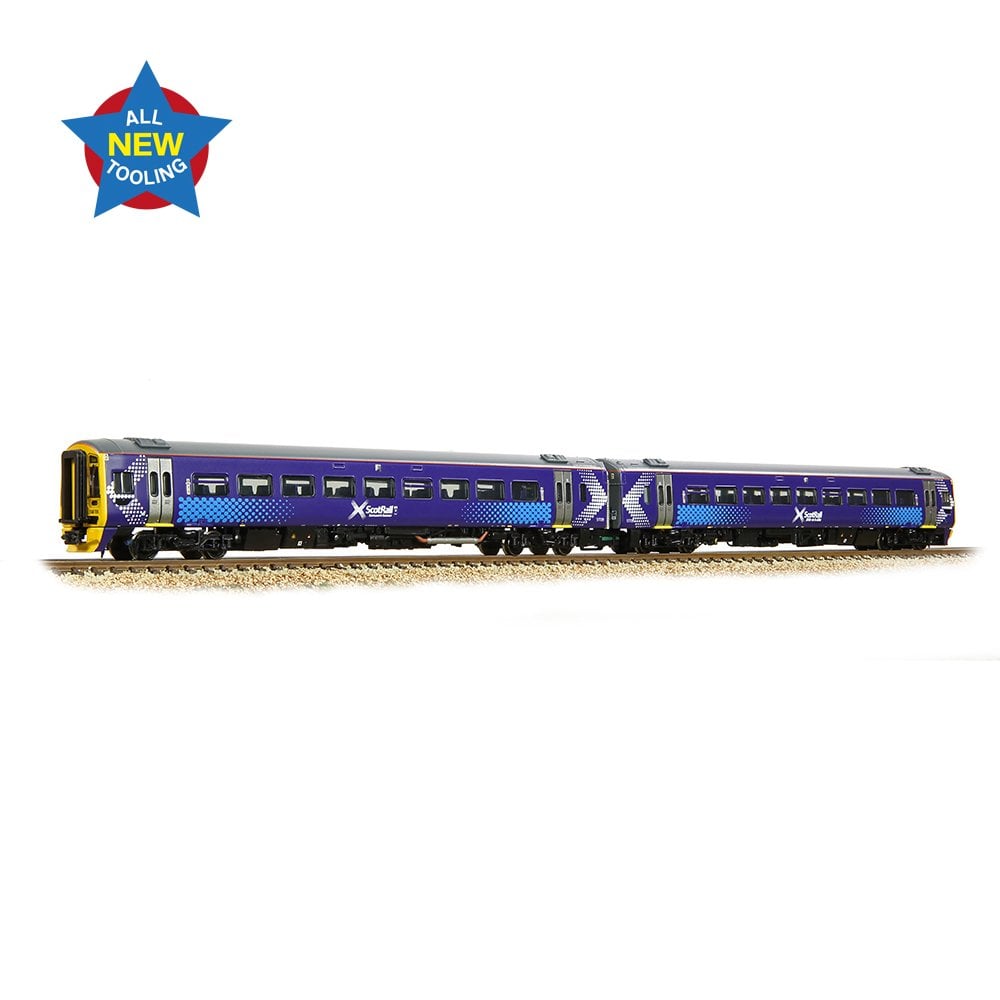
The Class 158 is one of British Rail’s most successful second generation Diesel Multiple Units (DMUs); first introduced in 1989, all but one of the original units remain in traffic to this day. This all-new Graham Farish model follows in the footsteps of the brand’s award winning Class 319 Electric Multiple Unit and captures this iconic prototype to a tee.
The pinnacle of N scale second generation DMUs, the Graham Farish Class 158 combines high fidelity bodyshells with an underframe that’s adorned with separate components depicting the engines, electrical equipment, and auxiliary gear. It’s the livery application which really brings these models to life and every element has been replicated in miniature. Whilst the main colours are spray painted, the myriad smaller logos, symbols and lettering are applied using a specialist printing process, using BR and corporate specification fonts, logos and colours.
Driven by the low-level drive mechanism, each vehicle sports uninterrupted views of the interior which is fitted out with tables, chairs and even metal luggage racks – made visible thanks to the saloon lighting. The inter-vehicle coupling system ensure that the two vehicles work together in harmony and enables the use of a single decoder for DCC operation. Fitting that decoder couldn’t be easier thanks to the clip-off underframe panel behind which the decoder socket is fitted and combined with the pre-fitted speaker, it’s easy to fit sound to your model
Features:
Pristine ScotRail Saltire livery
Running No. 158729
Two-Car Unit comprising car Nos. 52729 & 57729
Destination blinds for Dundee
Equipped with a Next18 DCC Decoder Socket – Recommend Decoder item No. 36-567B
Length 315mm
Coreless, twin shaft motor with two flywheels providing drive to both bogies of the DMS (A) vehicle
Four axle drive (all axles on the DMS (A) vehicle)
Electrical pickup from all wheels
Highly detailed bodyshell with flush, tinted glazing
Unobstructed interior including seat and table detail
Bogies constructed from multiple components featuring full relief detail
Separately applied underframe equipment and detail components
Separately applied metal detail parts, including exhaust guards and interior luggage racks
Each model is supplied with an accessory pack comprising exhaust pipes and cab end connector door covers (where appropriate)
Directional lighting, including illuminated destination panels, switchable on/off at either end on DCC or Analogue control
Cab and saloon interior lighting, switchable on/off via the under-chassis switches
Authentic light colours and temperatures selected for each model based on era and application
Speaker installed in all models for optimum sound reproduction
Zimo MS590N18 DCC Sound Decoder fitted to SOUND FITTED versions
Detail Variations Specific To This Model:
Radio Pod on Roof
Revised Air Conditioning (Type B)
Toilet Discharge via CET Tank
Cummins Engine
Revised Heather
Scottish Air Dam
Sanding Gear Fitted
Revised LED Light Cluster
Plated Gangway Doors
- Era 9
- N Scale
CLASS 158 DMU History:
The British Rail Class 158 Express Sprinter is a Diesel Multiple Unit (DMU), built specifically for British Rail's Provincial Services sector between 1989 and 1992 by British Rail Engineering Limited (BREL) at Derby Litchurch Lane Works and outshopped in Regional Railways Provincial livery. They were built to replace many locomotive-hauled passenger trains, thereby reducing cost of operation, and to allow cascading of existing Sprinter units to replace elderly 'heritage' DMUs. The majority of the 182-strong fleet of Class 158 units were built as two-car sets, with 17 three-car units constructed specifically for use on Trans-Pennine services. Similar three-car units were built for use by Network SouthEast but these were converted to Class 159 specification before introduced into service, with toilet retention tanks and other modifications to operate over the third-rail network.
All but one of the Class 158s remain in service today (2023), with operators including ScotRail, Northern, Great Western (GWR), East Midlands Trains (now EMR), and Transport for Wales (formerly Arriva). Former operators include Central Trains. The Class has worked extensively across the UK network, even into East Anglia as far as Stansted Airport and Norwich. Some 158s have been converted to additional Class 159s and now operate for South Western alongside their original classmates.
Code:
UK Delivery:
In stock items are usually despatched within 1-2 working days of ordering.
Return:
All returns must be received by us within 14 days of the date you received your order, please allow at least four days for postage. You will be required to cover the shipping and they must be returned via a traceable method – such as Royal Mail Signed For. We cannot accept responsibility for returned items until they are signed for by us.