This site uses cookies to provide and improve your shopping experience.
If you want to benefit from this improved service, please opt-in.
Cookies Page.
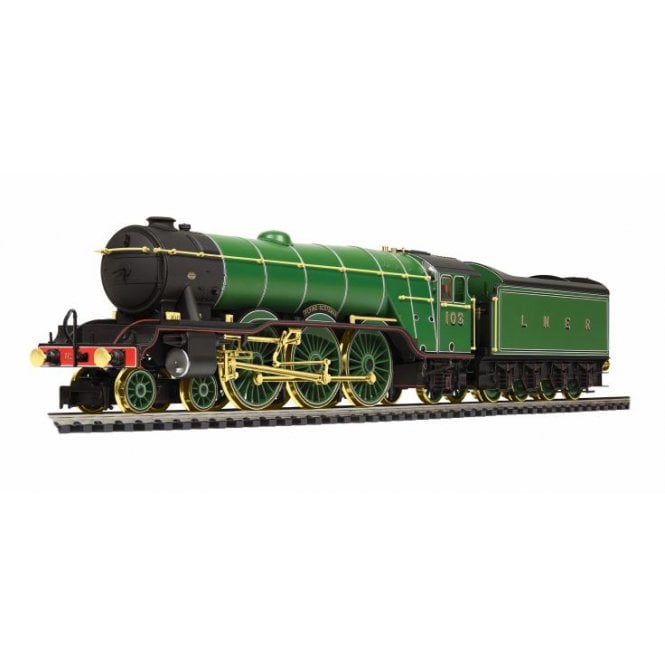
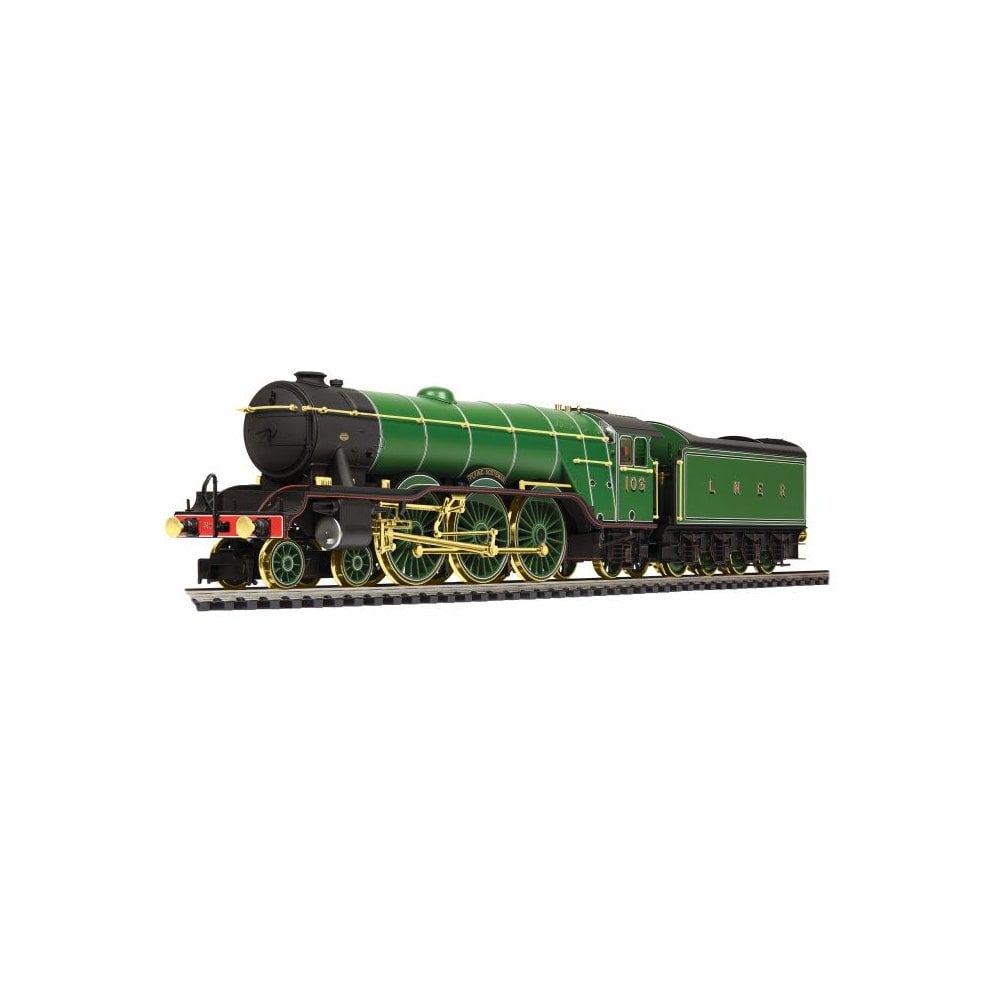
Hornby Dublo: LNER A3 4-6-2 103 'Flying Scotsman' Era 3
Includes:
- Diecast Locomotive body (plastic tender body as per original Hornby Dublo range)
- Locomotive depicts 1946 condition with Thompson renumbering scheme number 103
- Locomotive is in Right hand drive condition still.
- LNER Doncaster Green Livery
- High sided Non corridor tender as fitted from 1937 up to retirement in 1963.
- Accessory bag
- 8 PIN DCC Ready
- Plaque dating the model 1946
- Exclusive Hornby Dublo replicated packaging
- Gold Plated
- Limited Edition
- OO Scale
Locomotive information and history:
The largest of the constituent companies that would become the famous LNER was the GNR, and their Chief Mechanical Engineer naturally adopted the same position in the newly formed company, a man by the name of Herbert Nigel Gresley. As the brains behind the locomotive stock of the GNR, he had commissioned a new high speed passenger locomotive class to serve the GNR’s London to York main line. These became the A1 locomotive class, before a subsequent rebuild gave them the designation of the A3 class. One such example of this new and powerful class was named after the 10:00am service between London and Edinburgh, the named Special Scotch Express, or as it was renamed in 1924 the Flying Scotsman.
The locomotive in question, number 1472, was originally outshopped from the GNR’s Doncaster Works as a class A1 with GNR colouring, lettering and numbering before being renumbered and named in 1924 to promote the LNER’s Flying Scotsman service. Despite its new name and number, 4472 Flying Scotsman herself did not actually pull the Flying Scotsman service until 1928, spending the first four years of its life undertaking promotional work and light duties for the LNER, such as being its star exhibit at both the 1924 and 1925 British Empire Exhibition.
Relatively little of note would occur in the locomotives life and service for the next twenty years, with main changes consisting of her coupling with a corridor tender in 1928 (this allowed the locomotive to run non-stop between London and Edinburgh as the crew could be swapped via the tender mid run) before being reverted to the original tender in 1936. The game of LNER musical chairs did not stop here however, with the tender again being swapped in 1938 for a streamlined tender, with much the same appearance as a corridor tender without the corridor. Flying Scotsman would retain her streamlined tender until her withdrawal from British Railways service, numbered 60103, in 1963.
In preservation, Flying Scotsman has captured the hearts of the nation, becoming recognised by even those with less than a passing interest in railways and railway history. Under various notable owners, including Alan Pegler and Sir William McAlpine, Flying Scotsman has undertaken tours of America and Australia with mixed success and under ownership of the National Railway Museum saw a six million pound overhaul, cementing her future as a main line stalwart. Alan Pegler, the original saviour of the locomotive passed away in 2012, with his ashes being thrown into Scotsman’s firebox on the Farewell Alan Pegler rail tour between King’s Cross and York in 2018.
Code:
UK Delivery:
In stock items are usually despatched within 1-2 working days of ordering.
Return:
All returns must be received by us within 14 days of the date you received your order, please allow at least four days for postage. You will be required to cover the shipping and they must be returned via a traceable method – such as Royal Mail Signed For. We cannot accept responsibility for returned items until they are signed for by us.