This site uses cookies to provide and improve your shopping experience.
If you want to benefit from this improved service, please opt-in.
Cookies Page.
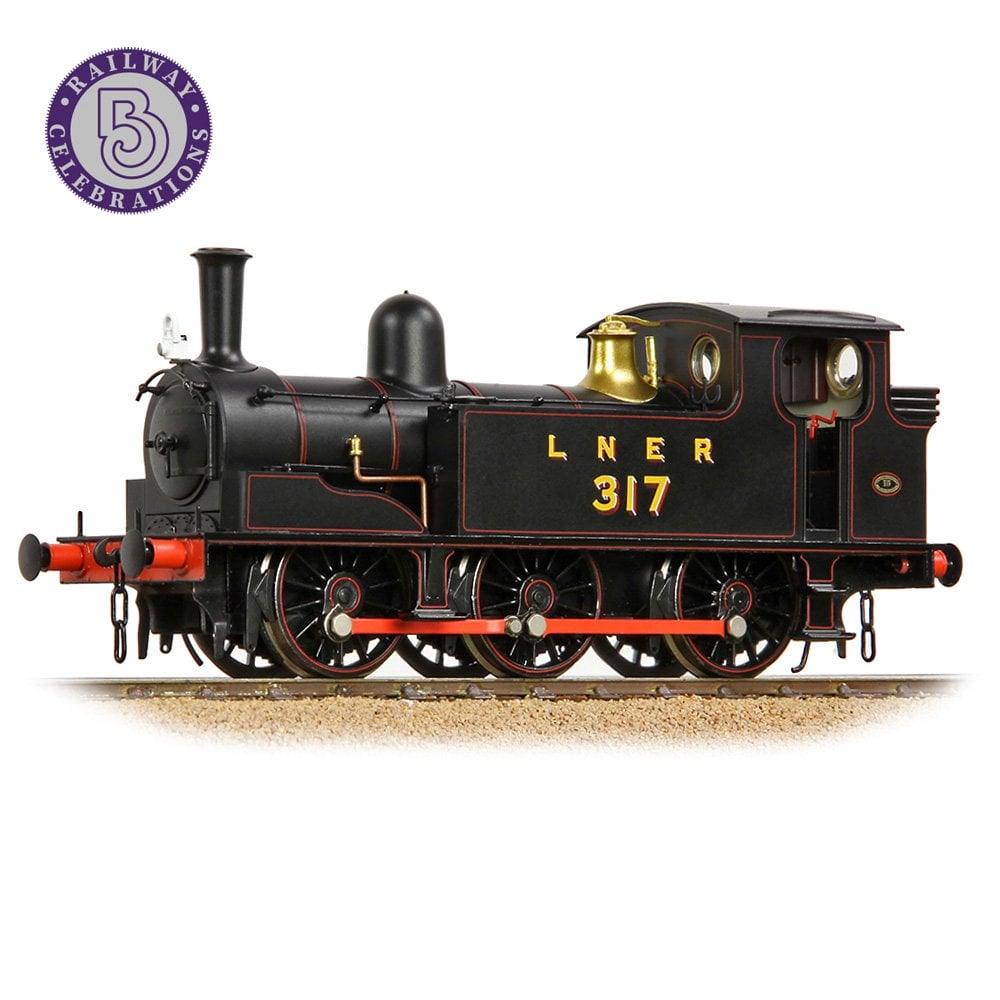
Equipped with a Next18 DCC Decoder Socket – Recommend Decoder item No. 36-567A
Length 118mm (over couplings)
Coreless motor
Electrical pickup from all wheels
Separate metal bearings fitted to each driving axle
Diecast metal chassis block
Diecast metal gearbox, with gearing arranged for prototypical running speeds and haulage capabilities
5mm (OO gauge) wheels to NEM310 & NEM311 standards with authentic profile and detailing
Detachable coupling pockets to NEM362 standards fitted at each end
Designed to operate on curves of second radius (438mm) or greater
Diecast metal running plate with integral side tank weights
Precision moulded plastic boiler, side tanks, cab and bunker
Separately applied details including splashers, tank filler hatches, safety valves, dome and chimney, smokebox handles, clack valves* and vacuum pipes* (*where applicable)
Individual metal detail components including handrails, handrail knobs, guard irons, lamp irons and turned metal whistle
Highly detailed and decorated cab interior including controls, dials, gauges and tool cabinets with separately fitted regulator, reverser and handbrake
Running gear detailing includes springs, brakes and separately fitted brake gear, sandboxes and sandpipes
Glazed cab spectacles
Sprung metal buffers
Each model supplied with an accessory pack including cab doors, additional bufferbeam pipework, poseable lamps and three-link couplings
Firebox Glow (on analogue) / Firebox Glow & Flicker (on DCC or when SOUND FITTED models are used on analogue)
Speaker installed in all models for optimum sound reproduction
The NER E Class 0-6-0 Tank Locomotive, later classified as J71 by the London & North Eastern Railway (LNER), was designed by Thomas W. Worsdell for the North Eastern Railway and was intended to become the company’s standard design for shunting engines. T. W. Worsdell became the NER’s Locomotive Superintendent in 1885 and a year later, the first E Class tank entered traffic. Eventually totalling 120 locomotives, 60 were built under T. W. Worsdell’s tenure, followed by 60 more when his brother Wilson Worsdell took over as Locomotive Superintendent following Thomas’s retirement in 1890. Construction ceased in 1895 and three years later, Wilson introduced his own take on the design, the E1 Class, the first of which entered traffic in 1898.
The E Class was set apart from the later E1s by having larger driving wheels and smaller cylinders. The splashers were larger as a result of the larger wheels, meanwhile the ‘Es’ sported smaller bunkers and were not fitted with coal rails at first, although these were later included. Early examples had clack valves feeding the boiler with Ramsbottom safety valves and a bell whistle. Later, Ross Pop safety valves and a tubular whistle were fitted and the clack valves were removed, bringing commonality between the E and E1 types. Metal bufferbeams were employed as built, but later many were fitted with wooden planks sandwiched between two metal sheets, as found on the later E1 engines.
The E Class tanks were found to be suitable workhorses for the NER’s sprawling network across the North East, particularly at coastal ports, freight depots and wharves where tracks could feature tight curves and weight restrictions were often in place. They were also suited to station pilot duties and local trip working, as well as allocations at the NER’s Darlington Works and Shildon workshops where they handled internal movements. All 120 locomotives passed into LNER ownership upon Grouping in 1923, becoming J71s, and remained in similar roles to those the NER had previously assigned them. By 1930 however, the E1s (now classified as J72s by the LNER) had started to replace the older J71s and by the time of Nationalisation in 1948, the class had been depleted by almost a third, leaving 81 examples in traffic.
The fleet that British Railways (BR) inherited in 1948 remained largely intact to start with, but by the 1950s they were being replaced by new 350hp Diesel Shunters (later BR Class 08) and by 1961 the final J71, No. 68233, had been withdrawn after a service life of 74 years. None survived into preservation.
Code:
UK Delivery:
In stock items are usually despatched within 1-2 working days of ordering.
Return:
All returns must be received by us within 14 days of the date you received your order, please allow at least four days for postage. You will be required to cover the shipping and they must be returned via a traceable method – such as Royal Mail Signed For. We cannot accept responsibility for returned items until they are signed for by us.